

BY Marco Kathuria—Caitlin Merritt, Chief of Preservation Services with Baltimore County’s planning division posted a memorandum of support in late January. It lays-out the county’s support for the historic preservation of the vacant Wilkins-Rogers Mill in Oella, Maryland — as opposed to demolition and general redevelopment.
News Archives
#ABOUT: Baltimore County’s Preservation Services Division
BY Marco Kathuria—As noted by Baltimore County’s Department of Planning, “Historic districts, buildings and their settings provide continuity with the past, establish a tangible sense of place, enhance the visual quality of life in Baltimore County, and present opportunities for economic revitalization. Preservation of historic resources has long been advocated by County plans and policies.”
#PLAN: Historic Preservation of the Ellicott Mill
BY Marco Kathuria—Part one in a multipart interview series featuring the key participants in the plan to redevelop an historic flour mill in Maryland is now available for viewing on YouTube and Vimeo. The existing structure was built in 1916 and stands on the footprint of several mills dating back to 1774 when the Ellicott Brothers built the first structures along the Patapsco River near Ellicott City.
#HISTORIES: Founding and Expansion
Oella, Maryland
Oella is a small factory town lying at the bottom of a rocky gorge on the east bank of the Patapsco River and is unified by its industrial heritage as a working community.
Its structures are functional and without ornamentation. This stark quality of the built environment placed in a dramatic natural setting still densely wooded gives Oella its special character.
The village consists of 19th century workers housing and one late 19th century church. The only known 20th century building is the 1919 mill.
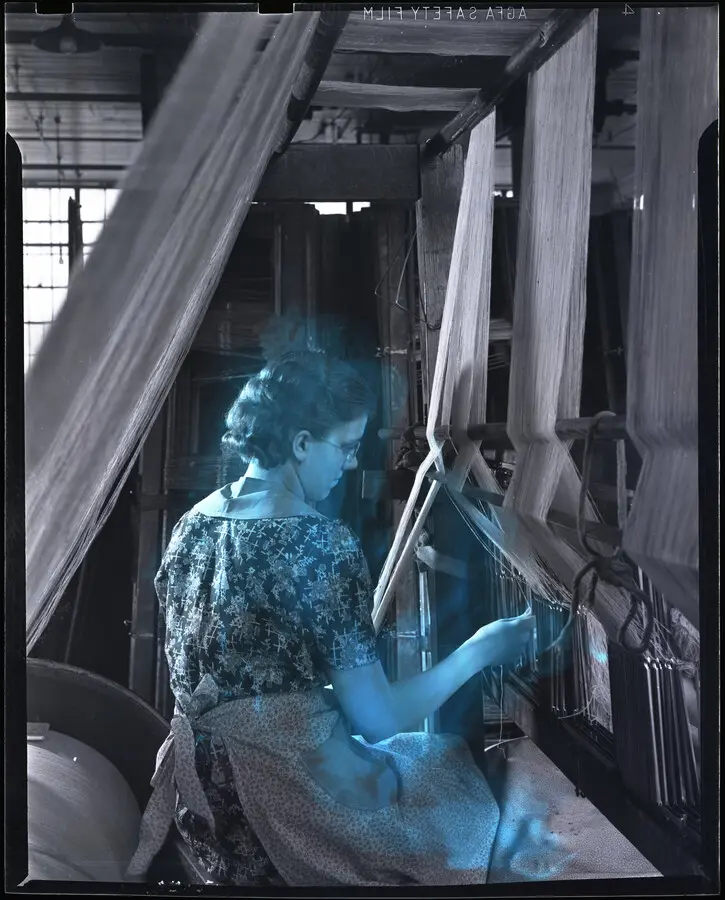
For a mile and a half north along the east bank of the Patapsco an early 19th century mill race still exists which until the 1970s provided water to the mill.
Roughly 50 structures and two sites exist in Oella. A constant domestic scale is maintained by the residences. The Dickey factory may dwarf earlier buildings but could not be considered an intrusion since the focal life of the district has always been the factory.
The workers’ housing in Oella consists of multiple units and sizeable family houses constructed of stone, brick, and wood. All these buildings retain the same scale and proportions. They are sited close to the road on steeply sloping lots.
The stone houses and the four log buildings (Logtown Road) were constructed in the first quarter of the 19th century when the Union Manufacturing Company began operation.
The Maximilian Godefroy drawing (c. 1812) shows most of the stone buildings. The brick houses date from the mid-century, while the frame buildings were constructed at the end of the century when the W.J. Dickey Company began operation.
The commercial building in the district is the County Corner Grocery at the junction of Oella and Westchester Avenues.
The one ecclesiastical building is the Oella Methodist Church, a simple frame building with a tower on the northeast corner. It has been converted for offices, and the top of the steeple removed.
The dominant structure is the 1919 W.J. Dickey Company Mill. The brick building varies in height between three and five stories depending on the ground level. It was constructed in the ruins of the Union Manufacturing Company’s mills. The exterior is divided into bays by continuous brick pilasters from the ground to the cornice joined by an arch. In between are large, multi-paned windows to maximize the use of natural light. At the junction of two of the wings is a four-story tower with a hip roof. Extending north from the factory is the Union Manufacturing Company’s mill race which continues to Union Dam at U.S. 40. Flood gate controls remain on the race.
Source: Maryland Historical Trust
#EXPLORATIONS: Stories by and About Oella Residents
The Oella Country Store is a Community Gathering Place in Oella
By Julie Baughman
Apr 03, 2013 at 1:17 pm
:quality(70)/arc-anglerfish-arc2-prod-tronc.s3.amazonaws.com/public/Y4Z3VXRXJNEQDDIRTAW7RLTYTY.jpg)
With “The Price is Right” on television in the background, and the sounds and smells of bacon crackling in the air, the regulars gather for breakfast at the Oella Country Corner Store on Oella Avenue.
It’s a scene repeated nearly every weekday morning in the small store that celebrated its 100th anniversary last year.
Store owner Jay Patel is proud of the community gathering place he’s created. It’s a far cry from the days when the town of Oella had no indoor plumbing and the Country Corner Store was known for hosting what resident, and corner store regular, Larry Rockenbaugh, called, “a lot of riff raff.”
Patel arrived in Oella in 1982 in a taxi cab with his 9-month-old son in his arms.
Searching for a spot to open a business, he was shocked by what he found in the small community nestled between Catonsville and the Howard County border.
“I came up from Ellicott City, and I see all the outhouses and kids taking showers outside,” Patel said.
“People were sitting outside (the store) smoking at 9 o’clock in the morning,” he said.
Rockenbaugh said kids and teenagers used to loiter outside the store all day drinking and smoking.
Their presence was a powerful deterrent for community members who might have otherwise gone into the store.
Since Patel took ownership of the store on July 9, 1983, the store’s atmosphere has taken a 180-degree turn.
“A year or so after Jay got it, he cleaned it up. He came in like Wyatt Earp and cleaned it up.”
Larry Rockenbaugh
Patel now stores the cigarettes in the back of the store, hidden beneath a stack of T-shirts in a filing cabinet in the store’s back office, away from the register.
Closer to the counter is the store’s fully functioning kitchen, which gives the establishment the feel of a diner. There he makes subs, sandwiches and breakfast food for customers.
After his wife died from a stroke four years ago, Patel restructured his menu to exclude salt in an effort to save his customers from a similar fate.
As one might expect in a general store, there is a variety of grocery products, ranging from canned soups to bread to candy.
Patel is proud of the partnership he’s created with the J.W. Treuth slaughterhouse down the street. The wholesale butcher shop, an area destination for decades, provides his store with fresh meat every morning. In turn, he provides their employees with some of his popular burgers.
“Most important thing is, holy cow, the cheeseburgers,” Patel said. “It melts like a chocolate in your mouth.”
However, the road to success has not been easy.
The first six months after Patel took over the store were, “rough and tough,” he said.
“It was scary. It was long hours from 7 in the morning to 10 p.m. at night,” said Patel, who was shot by two men trying to rob his store in 1992.
But now he’s got it down to a science.
“I saw the potential of the town. There were some good things where I could make my living. It took time to get used to the locals, and the people and what they needed.”
Jay Patel
He is known around Oella as “The Mayor,” because of the impact he has had there.
Every inch of wall space in the store is covered with photos of residents, drawings and paintings by their children and memorabilia from the town.
In the store Rockenbaugh and the other regulars gather to eat, talk and reminisce.
“It’s a place we can congregate and socialize,” he said.
“We come in here and B.S. all the time,” said Jack Cofiell, another regular.
Patel often leaves Cofiell, Rockenbaugh and the other regulars in the store while he does his afternoon shopping and banking.
“He trusts all of us. Jay, sometimes he’ll go shopping around 2 or 3 (p.m.), and we leave the store at 4 (p.m.) and lock the door and go.”
Jack Cofiell
Patel is thrilled with the success the store has seen and hopes to continue providing a gathering place for the community.
“What I had in my mind finally worked out like I wanted to after all these 31 years,” he said.
(SOURCE: The Baltimore Sun. No copyright infringement intended.)
Oella History: Modernization, Including Plumbing, Came Slowly
The historic “mill town” still has a strong sense of community.
BY Meg Tipper
On Monday night in the lecture hall at the Charlestown Retirement Community, the annual meeting of the Catonsville Historical Society featured Jadish “Jay” Patel’s lecture about his favorite subject: his adopted home of Oella, its history and its relationship to the Patapsco River.
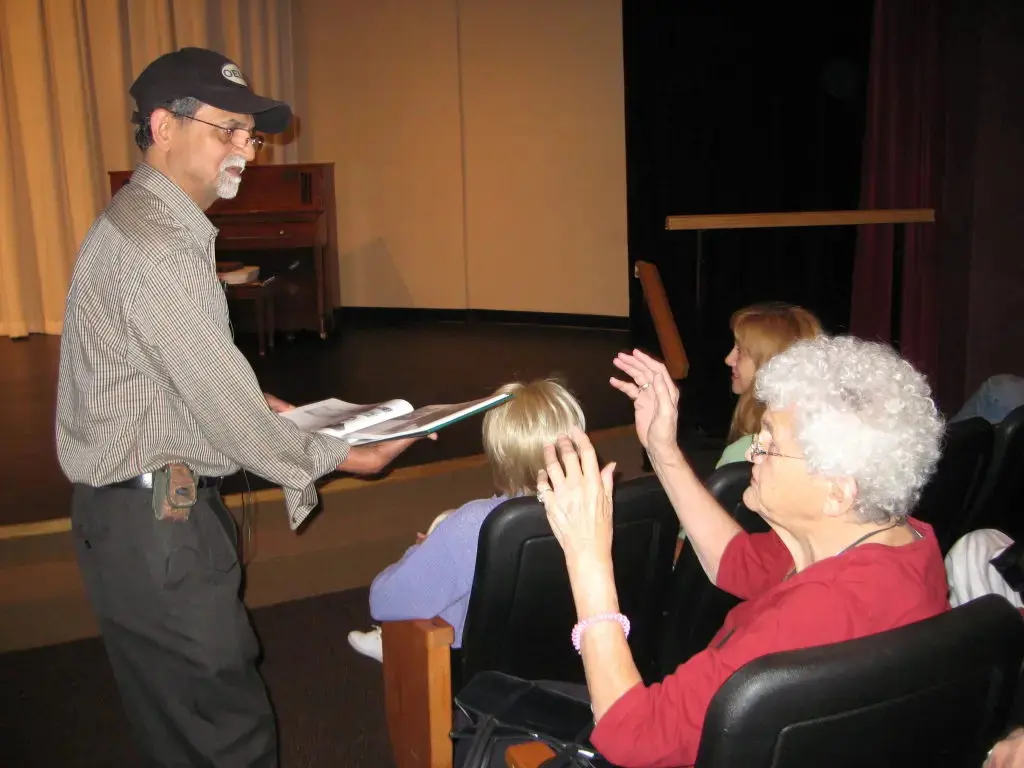
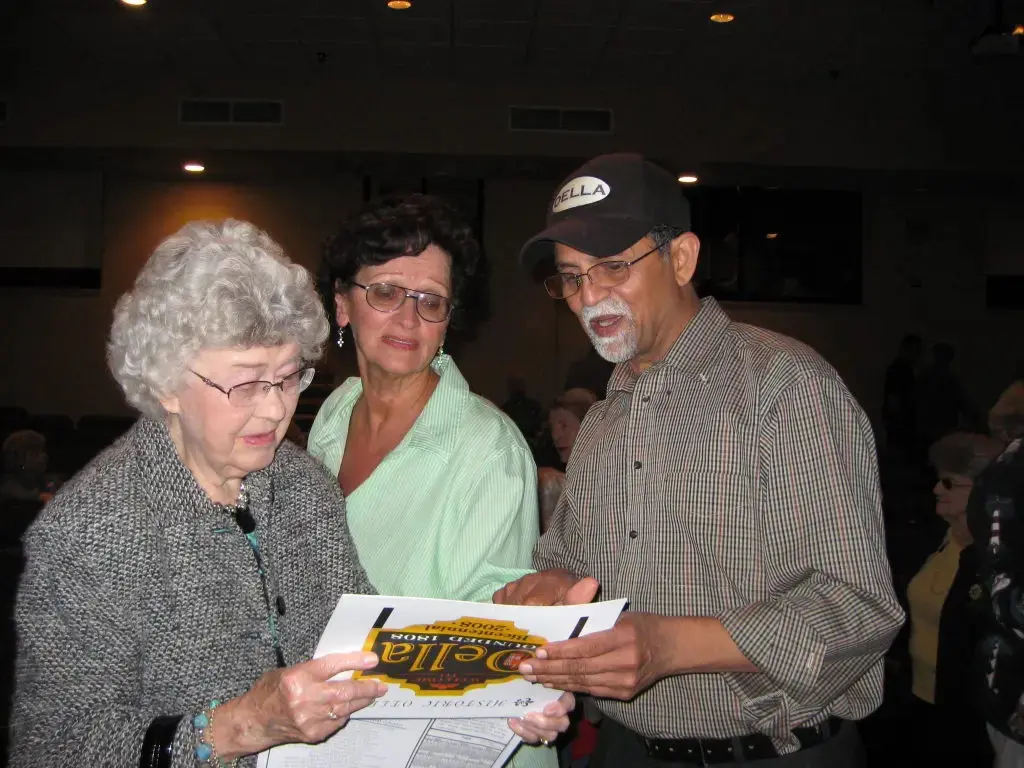
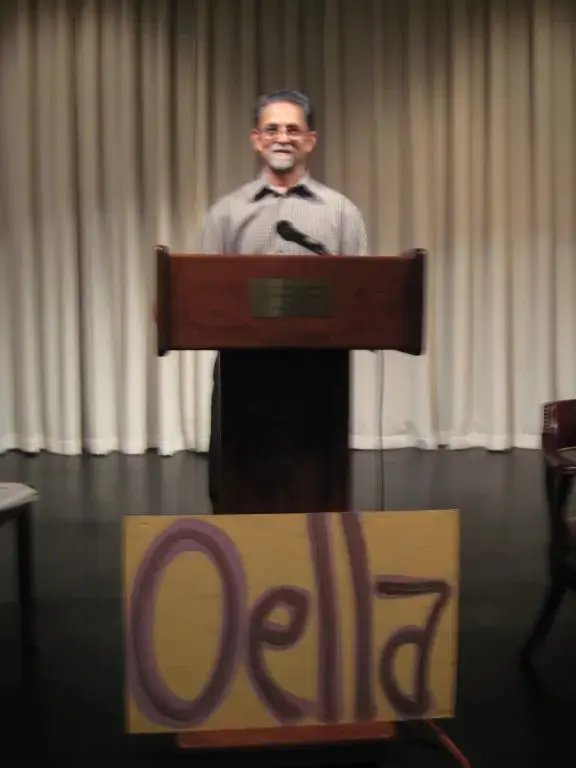
Jay is the owner and proprietor of Jay’s Country Corner Store, located at the corner of Oella Avenue and Westchester Avenue. He bought the property in 1983, attracted by…outhouses.
When I was a boy in India, we didn’t have outdoor toilets. When my family moved to Uganda, we used outhouses. As a young man in Singapore, I used outhouses. When I finally came to Oella in 1983 and saw all the outhouses, I knew I was home.
Jay Patel
Because Oella was a company town, with almost all property and services owned by the mill, it was not until 1976, after the Oella Mill had closed that Baltimore County began a $3.1 million dollar modernization plan, Patel said. The last of the plumbing was in place by 1984.
Now, Patel claims, the old outhouses have become collectors’ items, with people paying hundreds of dollars to move them and place them in their backyards for souvenirs.
The mill which was and still is at the center of life in Oella came into existence because of the proximity of the Patapsco River. In 1808, the Union Manufacturing Company purchased over 800 acres along the Patapsco River, and in 1811, they patented the name of “Oella.” Legend has it that the name came from the first woman to spin cotton in the Americas.
The Union Mill, later named the Oella Mill, literally owned the town. It was not only the principal employer, it built and rented out the housing. Over time, the village came to include a general store, the building now owned by Patel, which was built in 1912, three churches and a social hall. Today it is the old Westchester School, which served Oella’s children from 1924-1977, which functions as the Community Center. The town leases the building from the Baltimore County Public Schools for $1 a year, and the center hosts all kinds of meetings, from Irish dancing to yoga, and functions in many ways, from a church to a day care center.
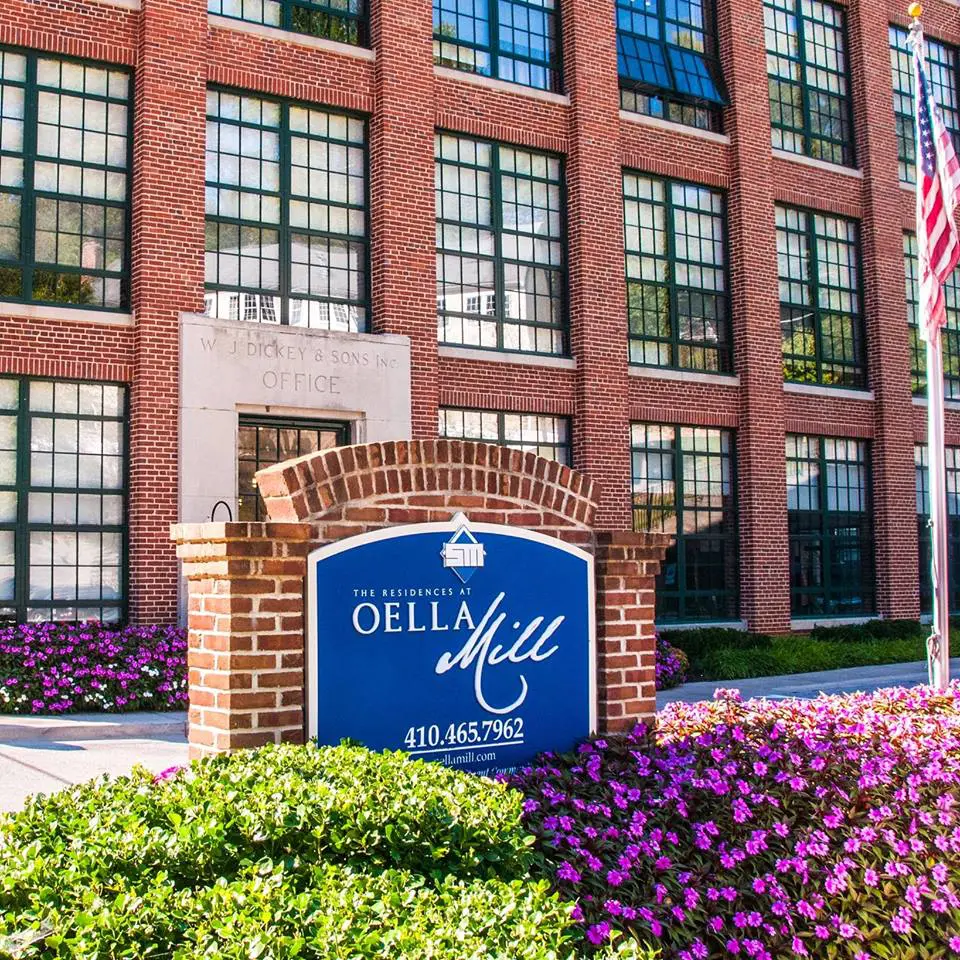
The mill evolved as a business with its ups and downs according to demand for textiles, mainly cotton and wool. In the early 19th Century, there were as many as 300 employees, and the Union Mill was one of the largest textile manufacturers in the country. During World War II, the mill was busy making army blankets. The Oella Mill ceased operating in 1972. In the 70s and 80s some space in the old mill building was rented to local artists and antique dealers. Today it houses 147 apartments in the Residences at Oella Mill.
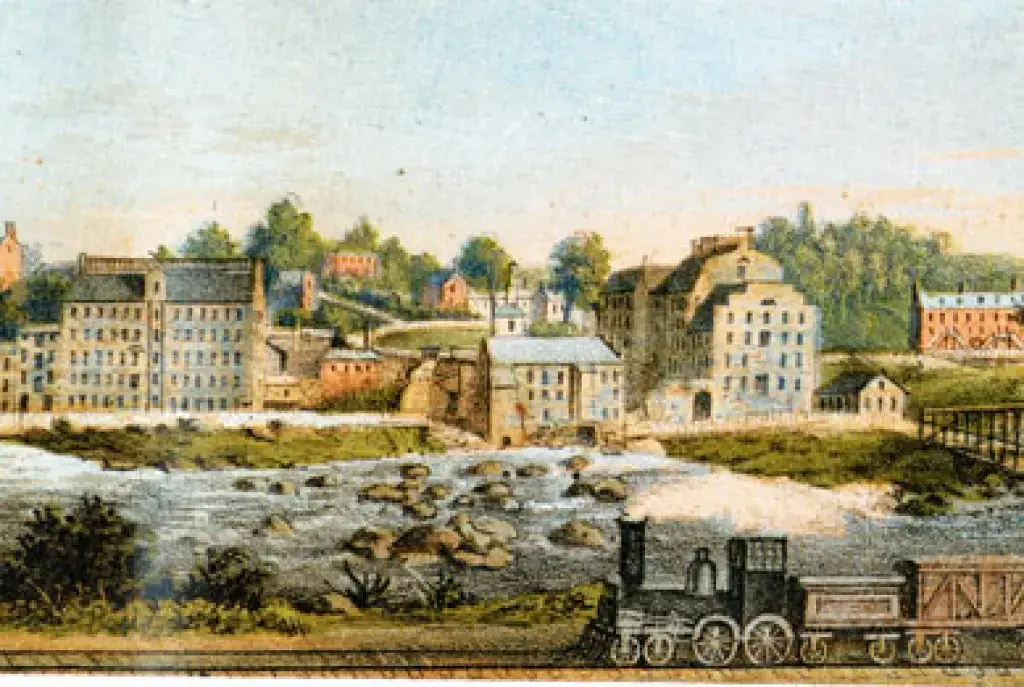
One of the many things Patel loves about Oella is hearing the train whistle at night as CSX trains still carry freight on the old Baltimore and Ohio rail line along the Patapsco River bed. This rail line between Baltimore and Ellicott City was the first railroad in the country.
Patel welcomed everyone to explore his historic village and appreciate its changes and resilience, to visit his old fashioned country store and to take a walk along the beautiful No. 9 Trolley Trail which passes through Oella.
(SOURCE: Patch.com. No copyright infringement intended.)
#ARCHIVES: The Oella Historic District Registration with The National Park Service
A Scan of the Original Form Submission
Source Document Processed with Optical Character Recognition Software (Edited)
REPRESENTATION IN EXISTING SURVEYS
Historic American Buildings Survey,
Baltimore County Historical Society Historic Buildings Survey,
Library of Congress, Wash., D.C.
Date
1964-1975
Depository for Survey Records:
Baltimore County Historical Society
Agricultural Building,
County Home Park,
Cockeysville,
Maryland
DESCRIBE THE PRESENT AND ORIGINAL (IF KNOWN) PHYSICAL APPEARANCE
Topography and industry have determined the appearance of Oella, situated where the Patapsco River rushes through a steep, densely wooded gorge. The proximity to the Baltimore Harbor coupled with unharnessed water power brought the first industry here in the 18th century [See Maryland’s National Register Properties for Ellicott Mills (site) Historic District]. Factories requiring large floor space have since the 1770’s been constructed on the narrow, level ground near the river. All other structures sought space on the remaining level ground or climbed the hill.
The orientation of Oella is naturally and historically toward the factory at its heart. The hill acts as a natural barrier defining the district and turning the focus away from Baltimore County. Even today the post office and telephone exchange for Oella is shared with Ellicott City in Howard County, not Baltimore County.
Oella is unified by its industrial heritage as a working community. Its structures are functional, without ornamentation. This stark quality of the built environment placed in a dramatic natural setting still densely wooded gives Oella its special character.
Oella Avenue provides the access from the wilderness feeling of the southern boundary (just north of Granite Hill, Ellicott Mills (site) Historic District). It winds north for a half mile before turning to climb the hill at the Dickey factory at the intersection of Glen Road and Hollow Road. These two streets extend directly east up the hill while Oella Avenue continues north for several hundred, yards before turning east. Oella consists of 19th century workers housing and a late 19th century church. The only known 20th century building is the 1919 mill. For a mile and a half north along the east bank of the Patapsco an early 19th century mill race still exists which until the 1970’s provided power to the mill. Roughly 50 structures and two sites exist in Oella. A constant domestic scale is maintained by the residences. The Dickey factory may dwarf earlier buildings but could not be considered an intrusion since the focal life of the district has always been the factory.
Adaptive use is not a new term in Oella. The church houses the offices of the W. J. Dickey Company. The factory contains one “adaptive use” and the owner is looking for more people to join him in occupying the ample square footage. Community development planners at the state and local level are looking at Oella as a prime, untouched environment for the plan of their expertise. It is vital for the protection of this cultural resource that preservation is granted equal time.
The workers’ housing in Oella consists of multiple units and sizeable family houses constructed of stone, brick, and wood. All these buildings retain the same scale and proportions. They are sited close to the road on steeply sloping lots. The President of the Dickey Company owns most of the property. The detached houses located higher up the hill are privately owned.
Dating can be done by building material. The stone houses and the four log buildings (Logtown Road) were constructed in the first quarter of the 19th century when the Union Manufacturing Company began operation. The Maximilian Godefroy drawing (c.1812) shows most of the stone buildings. The brick houses date from the mid-century, while the frame buildings were constructed at the end of the century when the W.J. Dickey Company began operation.
The most oppressive stone structure is the “Storekeeper’s House” at 804-806 Oella Avenue. It is a three-story, four bay building with enclosed brick chimneys at each gable end. The stone arches on the windows and the 12-over-8 sash are two details which help make this building recognizable in the circa 1812 Godefroy drawing. The first floor is covered with a one-story porch.
Stone Row, on Oella Avenue, is multiple unit buildings two and one-half stories high with a gable roof and six-over-six sashes. The stone is well laid in circular courses. Each unit in Stone Row is two bays wide with a dormer in the attic. One porch extends across the facade.
The Johnson House on Hollow Road is one of the few detached stone buildings. It is three bays wide and two stories tall with a gable roof and central entrance. One room has been added to the gable end, but this does not alter the integrity of the stone house.
The brick houses, like the stone ones, are plain, solidly constructed, functional dwellings. Long Brick Row (700-744 Oella Avenue) which contains thirty houses in an unbroken terrace along a curved street is the most impressive. Each two-story section is four bays wide divided by a parapet extending along the gable roof to the chimney and contains two units with the doors paired at the center.
Short Brick Row (700 block Oella Avenue) is a two-story terrace located behind a stone retaining wall. Obscured by the hill, trees and a single one-story porch, the brick dwellings are two-stories tall and two bays wide under a gable roof.
Spring Street contains five three-story brick duplexes, each of which is four bays wide with a gable roof. The six-over-six window sashes have flat brick arches. A hip-roofed porch covers the first-floor facade.
The more numerous frame buildings offer greater variety than the brick and stone ones. The frame buildings are also larger. The 700 block of Oella Avenue (Pleasant Hill) contains four bay (two bay per unit), two-story duplexes with a bracketed cornice behind which the flat roof slopes downward. The windows contain two-over-two sash. Some of the buildings have a porch across the first floor.
The 500 and 600 blocks of Oella Avenue contain more two-story duplexes with first floor porches and a central chimney in the gable roof of each unit. This row, the frame row in the 700 block, and most of the remaining frame buildings are covered with asbestos shingles.
The frame, single-family houses are constructed with the gable end to the street hey are two and one-half stories tall and two bays wide with a one-story porch.
The commercial building in the district is the County Corner Grocery at the junction of Oella and Westchester Avenues. The one ecclesiastical building is the Oella Methodist Church, a simple frame building with a tower on the northeast corner. It has been converted for offices. (The top of the steeple has been taken down.)
The dominant structure is the 1919 W. S. Dickey Company mill. The brick building varies in height between three and five stories depending on the ground level. It was constructed in the ruins of the Union Manufacturing Company’s mills. The exterior is divided into bays by continuous brick pilasters from the ground to the cornice joined by an arch. In between are large, multi-paned windows to maximize the use of natural light. At the junction of two of the wings is a four-story tower with a hip roof.
Extending north from the factory is the Union Manufacturing Company’s millrace which continues to Union Dam at U.S. 40. Flood gate controls remain on the race.
BUILDER/ARCHITECT: STATEMENT OF SIGNIFICANCE
The Oella Historic District is a major 19th century industrial center in Maryland whose original character and setting is intact. One of the earliest and more extensive cotton factories in the United States, the Union Manufacturing Company, located in and chose the name of Oella. This company used water powered looms as early as 1819. The W. J. Dickey Company, the successor to the Union Company, was one of the largest textile firms in the South in the early 20th century. The influx of man-made fibers tolled the death knell of the W. J. Dickey Company, a producer of woven goods. Industry has dominated the economy of Oella. The constant demand for newer facilities coupled with fires and floods on the Patapsco led to the frequent replacement of factories. The continuing rich history is reflected n the extant residential buildings. Oella, therefore, is a 19th century village of pristine, unpretentious, functional workers houses.
In 1808, the Union Manufacturing Company bought the site from the Ridgely family (later the company acquired land from the Ellicott family).
A group of prominent Baltimoreans (Robert McKim, William Wilson, William Jones, John Trimble, James H. McGullock, Ludwig Bering, August Jacob Schwartz, Nathan Levering and James Beatty) had organized the textile firm the same year. Under a state charter, the Union Company had an authorized capitalization of one million dollars, the largest in the state and one of the largest in the country. The company’s first mill, completed on October 6, 1809, was five stories tall, measured 106 by 144 feet, and contained 800 spindles. In 1811 the Union Company had its property resurveyed and patented as Oella” in commemoration of the first woman who applied herself to the spinning of Cotton on the Continent of America.” (Patents, liber IB #B, Folio 8; Hall of Records, Annapolis).
An excellent description of the company is found in the 1811-1812 diary of Sir August John Foster, the British minister to the United States. Here recorded that an Englishman, Matthew Waddell, directed the mill which spun 200 pounds of cotton per day, chiefly into yam and jean and royal rib forest material. The cotton came from New Orleans, cost eleven cents a pound and was very dirty. Three hundred employees, including children, worked from sunrise to sunset with a half-hour for breakfast and an hour for dinner. Foster thought this workday was too long.
MAJOR BIBLIOGRAPHICAL REFERENCES
John McGrain complied historical data on Oella. He is the authority on the mills of Maryland. His report on Oella is available at the Maryland Historical Trust in Annapolis or at the Baltimore County Historical Society in Cockeysville. The research was conducted in primary sources including 19th century newspapers; county land, probate, and tax records; historic maps and manuscripts. Secondary sources included theses and articles in the Maryland Historical Magazine, the Society for Industrial Archaeology newspapers.
GEOGRAPHICAL DATA
The Oella Historic District is bounded on the west by the west bank of the Patapsco River, on the south by a line 600′ southeast of the center of the Baltimore Gas & Electric right-of–way and parallel to its southeast to the rear property line of the property of Charles Wagandt II the neat and north following the same rear property line to a point 250′ southwest of the intersection of the Wagandt property line and Glen Road then southeast in a line paralleling Glen Road (250′ southwest of Glen Road) for roughly 800’.
Contemporaneously Maximilian Godefroy, architect of St. Mary’s Seminary Chapel in Baltimore City, executed a remarkable drawing of the Union Manufacturing Company illustrating a mill with a water wheel and a second building, probably another mill, behind the first. Two substantial dwellings, a row of houses and an additional outbuilding (demolished) complete the drawing.
At the time of the War of 1812 the Union Manufacturing Company was the third largest in the United States. Plans to construct a third and fourth mill, announced in Niles Register, November 12, 1813, indicate the directors’ ambitions. A fire on December 13, 1815, decimated the factories, but a month later the company was back in business. The two disasters added to the loss of the capital forced the company to scrap expansion plans. Business was continued in the first mill (1812) on its 5000 spindles.
In 1819 the Union Company introduced power looms operated by water-driven shafts, a recent invention. A year later the Patapsco was supplying power for twenty loons. Business improved, justifying the construction of an additional mill (1822) containing 150 power looms and 7000 spindles, making Oella the largest textile concern outside New England.
At that time, the company employed ten men, sixteen boys and 104 girls. One hundred fifty thousand pounds of raw cotton were made into 120,000 pounds of yarn and 240,000 yards of cloth a year. Eighty tenements existed in Oella; other buildings included machine houses, smith shops, a grist mill, a boarding house for the seventy apprentices and a schoolhouse.
Production expanded to such an extent that the company miscalculated the market and produced more than could be sold. In 1834 the factory was forced to close.
In the mid-1840’s, undaunted by these financial problems, a second textile concern, the Granite Hill Factory, opened a mill with accompanying housing south of the Union Manufacturing Company. (This concern was located on the site of an Ellicott iron works. See Ellicott Mills (site) Historic District). By 1850 the company had built a four-story, steam-heated granite mill,48 by 168 feet, with gas lights. It employed forty men and 110 women. The water-powered looms produced 1.35 million yards of muslin a year.
Financial problems plagued the Granite Hill Factory. These were compounded by an 1868 flood which reduced the mill to rubble and washed the mill demand several houses down the Patapsco.
In the 1870’s the Union Manufacturing Company bought out Granite Hill. The construction of new factory buildings followed the acquisition which, in turn, preceded financial disaster. In 1887 the W. J. Dickey Company bought the entire complex.
Dickey, born in Ireland, began a textile work in Baltimore in 1838 with seventy-five dollars. His business so expanded that by the end of the century he had purchased Oella and the Ashland Company at what is now Dickeyville. Dickey saw his concern become the largest woolen textile mill in the South. He constructed a new factory and expanded production into wool. The peak was reached in World War I. In 1918 an electrical fire destroyed mill buildings and threatened the housing of the 600 employees. A rebuilding program saw the construction of the present mill.
Manufacturing continued through the 20th century with a brief interruption during the Depression. The Patapsco continued to provide power to generate electricity until 1972 when hurricane Agnes flooded the power plant. The same year the Dickey Company ceased manufacturing.
The Oella district stands today as the visible remains of a past way of life, that of the company towns which grew up around the factories and mills of 19th century America. Villages such as this which have remain unaltered are some of the most important tools in the study of industrial archaeology.
Charles Wagandt, II, recognized Maryland historian on the Middle Period, has conducted detailed research on Oella in primary and secondary sources. His work on the W. J. Dickey records is ongoing. Mr. Wagandt is doing an extensive history project among the residents of Oella.
Alice (Mrs. Clyde) Martin of the Baltimore County Historical Society and the Baltimore County Committee of the Maryland Historical Trust compiled exhaustive maps on the district – dates of buildings, sites of structures, property lines – as well as a complete list of property owners.
To the intersection of the rear property line of the properties on the west side of Westchester Avenue then north following the rear property line to the southern property lines on the south side of Oella Avenue, then east approximately 275′ then north following the eastern property line to Oella Avenue then west on Oella Avenue approximately 125′ then north following the east property line of 446 Oella Avenue and of the Oella Cemetery then west following the northern property line of the cemetery and Charles Wagandt’s property to the 200* elevation line approximately 75′ east of the mill race then north following a line marking 200′ elevation north to the south side of the U.S. 40 bridge on the Patapsco and northwest to the west bank of the Patapsco.
FORM PREPARED BY:
John McGrain, Vice President
Baltimore County Historical Society
34 Willow Avenue
Towson, Maryland 21204
Summer 1975
301-823-1844
Alice Martin, Baltimore County Committee,
Maryland Historical Trust
Route 1, Box 98
Phoenix, Maryland
Fall 1975
301-472-2128
Nancy Miller, Historian
Maryland Historical Trust
Annapolis, Maryland 21401
Fall 1975
301-267-1438
Source: National Park Service Digital Asset Management System
