

(This article was originally published by the Washington Post in 1993)
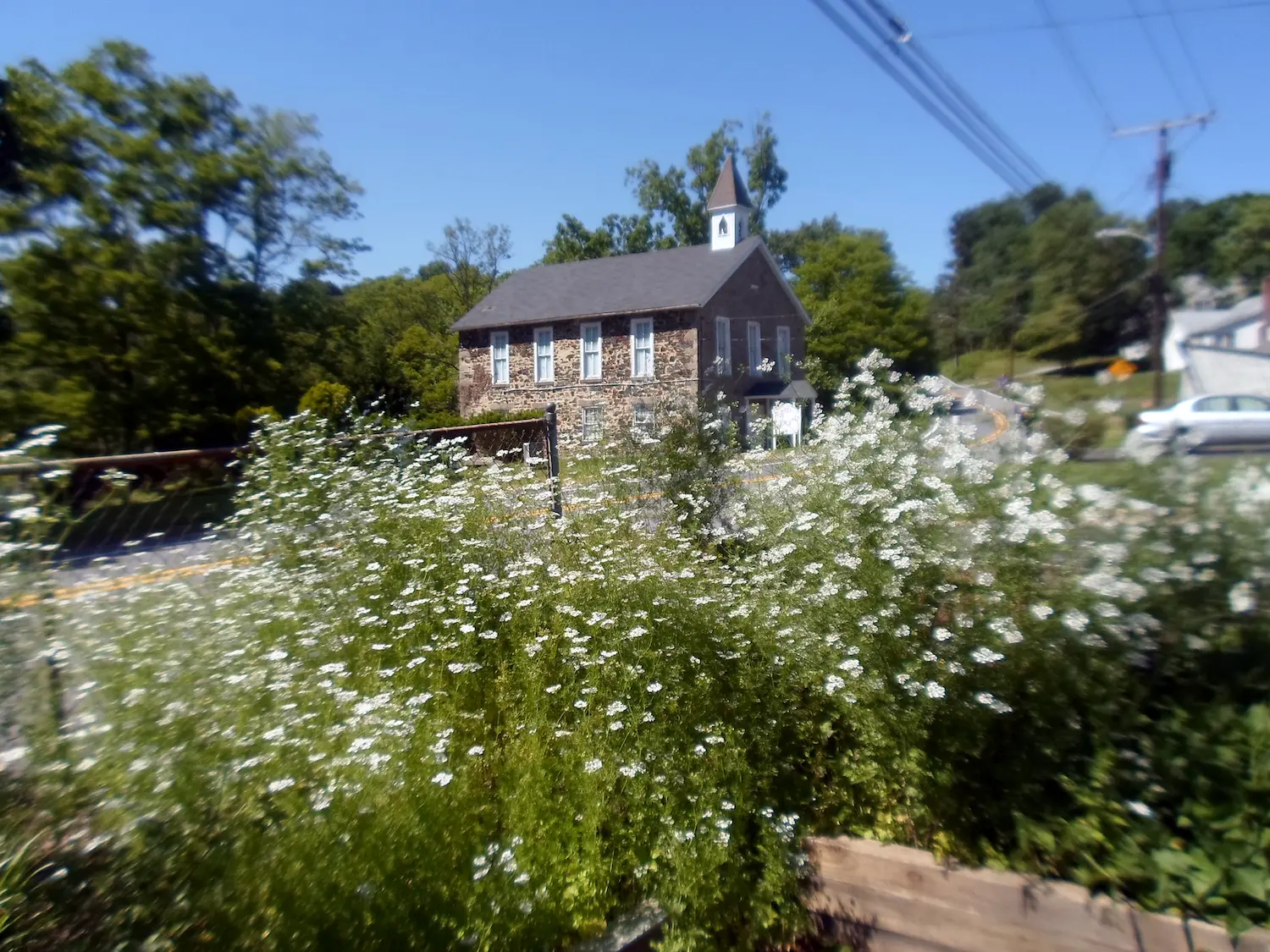
Tucked away in the wooded ravines of the Patapsco River valley just west of Baltimore stands Oella, a 19th century mill village of frame homes and brick and stone row houses that time seems to have passed by.
While its inhabitants, including many Washington commuters, are definitely of the late 20th century, its sounds and sights evoke images of another time — the soft curve of weathered brick, the murmur of a river, a dog lazing in mid-road.
“It has a sense of place and history,” said Sheri Parks, 36, an American studies professor at the University of Maryland in College Park, who with her husband, Lovell Smith, 36, a sociology professor at Loyola College in Baltimore, has lived in Oella for eight years.
“The river — that’s pretty neat having it out front,” said Mike McKee, 30, a technician at the Walters Art Gallery in Baltimore. His 180-year-old stone row house looks down a few dozen yards away on the Patapsco, which was once the power source for the woolen mill that operated in Oella until 1972.
“We love it,” said McKee’s wife, Dena Picken, 35, a mapmaker for the Interior Department’s Bureau of Indian Affairs in Washington.
Listed on the National Register of Historic Places, Oella lies just east of the Patapsco River in Baltimore County and is within walking distance of equally historic and better known Ellicott City across the river in Howard County.
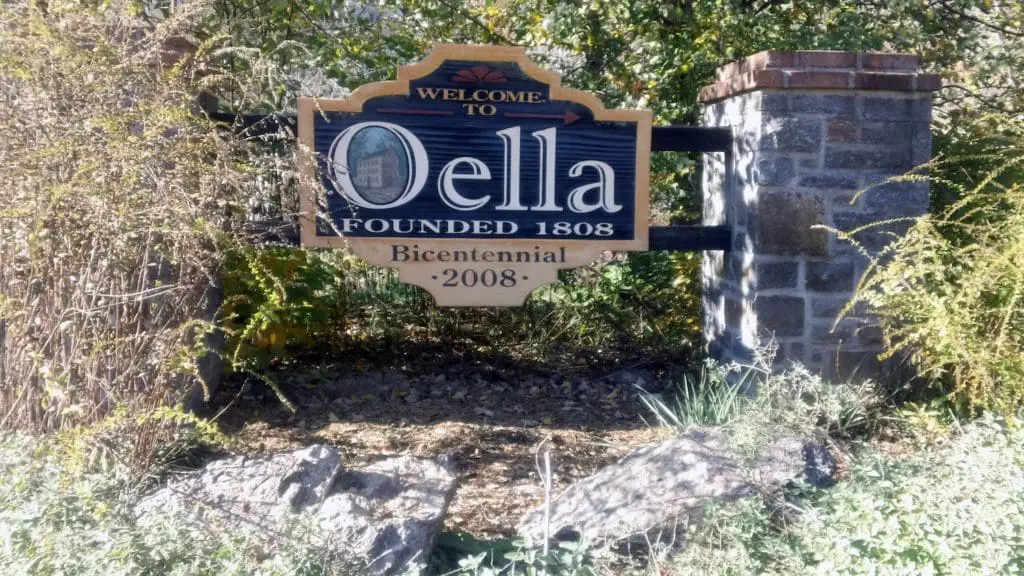
Oella is not just a historic site with roots going back to 1808, when its first mill was established. It has been transformed in the last 20 years from a gritty company town of 111 small, no-indoor-plumbing houses to a broad-based community of restored and upgraded homes occupied by a range of low- and high-income renters and buyers. The occupants include newly arrived artisans and white-collar professionals, as well as surviving members of the original mill employees’ families.
“A nice class mix,” as Parks put it.
The person largely responsible for the transformation is Charles Wagandt, a Baltimore developer and scion of the William J. Dickey family, which owned the Oella woolen mill.
When mill operations closed in 1972, Wagandt bought the 78-acre village, except for the mill building, from his family.

Working with Baltimore County officials and historic preservation specialists, he brought in running water and indoor plumbing, upgraded electric service and replaced rotting wood on Oella’s frame houses with wooden siding.
“The game plan was to maintain the architectural integrity of the streetscape, keeping the fronts of all houses as close to their original appearance as possible. With its steep and winding streets, Oella is not oriented towards the car. It’s oriented toward the pedestrian.”
Charles Wagandt
Equally important, Wagandt said he sought a wide “economic mix” of renters and buyers, allowing higher income buyers to expand and customize some original houses but also making federal rent subsidies available to several lower-income families.
He also said he made certain that all of the estimated 100 mill families in Oella when the mill closed in 1972 could remain in their homes.
“We weren’t going to run anybody out of here,” he said. Their numbers have since dwindled as members died or moved away. About 14 families remain today.
Of the 111 original houses in Oella, 37 form four sets of brick or stone row houses. Wagandt sold them as a package to a partnership created by the Baltimore developer Struever Bros. Eccles & Rouse for restoration and modernization.
Wagandt kept the remaining 74 houses, many of them detached frame homes. He has sold some and is renting the rest through his Oella Co.
“The community is moving from predominantly rental to predominantly home-owned housing,” he said.
Rents for two-bedroom units in the curving “long brick row” along Oella Avenue, for example, average $600 to $650 a month. Purchase prices range from $83,000 to $85,000.
In addition to the original houses, Wagandt sold several acres of undeveloped land in Oella to GYC Builders of Ellicott City for new construction. Largely screened from the original village, the new houses include Timber Point, a tract of 30 three-bedroom town homes, most of them completed and sold in the last two years for $179,900 to $189,900.
GYC also has begun construction of a group of nine $279,900-plus luxury town homes called River Ridge, closer to the Patapsco along Oella Avenue.
Phil Cogan, 52, who commutes daily by MARC train to his job in Washington in President Clinton’s executive office, said he and his wife, Rose, chose their Timber Point home for various reasons, including its spaciousness.
“It was the only town house that could accommodate a baby grand piano,” he said.
Colleen Jude, an emergency room physician who lives at Timber Point and sometimes commutes 50 minutes by car to Washington, said she likes the “quiet feeling of being in the country,” while being near Baltimore, which is about 20 minutes away.
“I see deer out the back window,” she said. “… Where can you get that near a city?”
(Source: The Washington Post. No copyright infringement intended.)

Leave a Reply